- February 29, 2024
- Natalia Allende
In recent years, there’s been a surge in people’s interest in incorporating vintage pieces and antiques in interior design schemes. This is great, as for many years so many wonderful pieces languished in auction houses, depriving us from all the character and beauty they bring. In this post I share my best advice for how to successfully incorporate vintage pieces and antiques in interior design schemes. But before we go into why using them is a good idea and how to do it, let’s define vintage and antique.
The difference between vintage and antique is actually quite simple: a vintage piece was created between 20 and 100 years ago. (You can’t call a 10 year-old piece vintage. That’s just “used”.) An antique is anything created over a 100 years ago. But beyond that difference, there are other aspects of interest in that can drive one’s interest in choosing one or the other.
Vintage objects of interest
We understand vintage pieces as typically those that come from the 40s, 50s, 60s, or 70s. They usually draw our interest because they represent an iconic creator, manufacturer or style. If they were manufactured in limited quantities, then they can fall into the category of collectible design. They also may represent historical significance, such as a break away from an era and redefining of design, for example. Very desirable as well is that they were built to last, so a well-kept piece can be completely functional too.
Antiques: skill and beauty that spills into new centuries
An antique piece is often valued for their high-level craftsmanship and handmade quality. In an era in which almost everything is machine-made (great for getting nice-looking pieces into everyone’s hands), there is something uniquely inspiring and comforting about a piece that has stood the test of time. Especially appealing is that it was built by an actual person who put the knowledge and skills they developed over many years, or even decades of practice. This is part of the beauty that lives in the piece one has the privilege to live with.
The skilled tradesmen who created many of the antiques from different eras usually made these from specific materials: metals, porcelain, and especially wood. They chose these materials to be able to create the design as they desired, but also to elevate the particular quality of the material. A well-preserved antique develops a wonderful patina over time, further enhancing the quality in the materials that the craftsmen to bring to light.
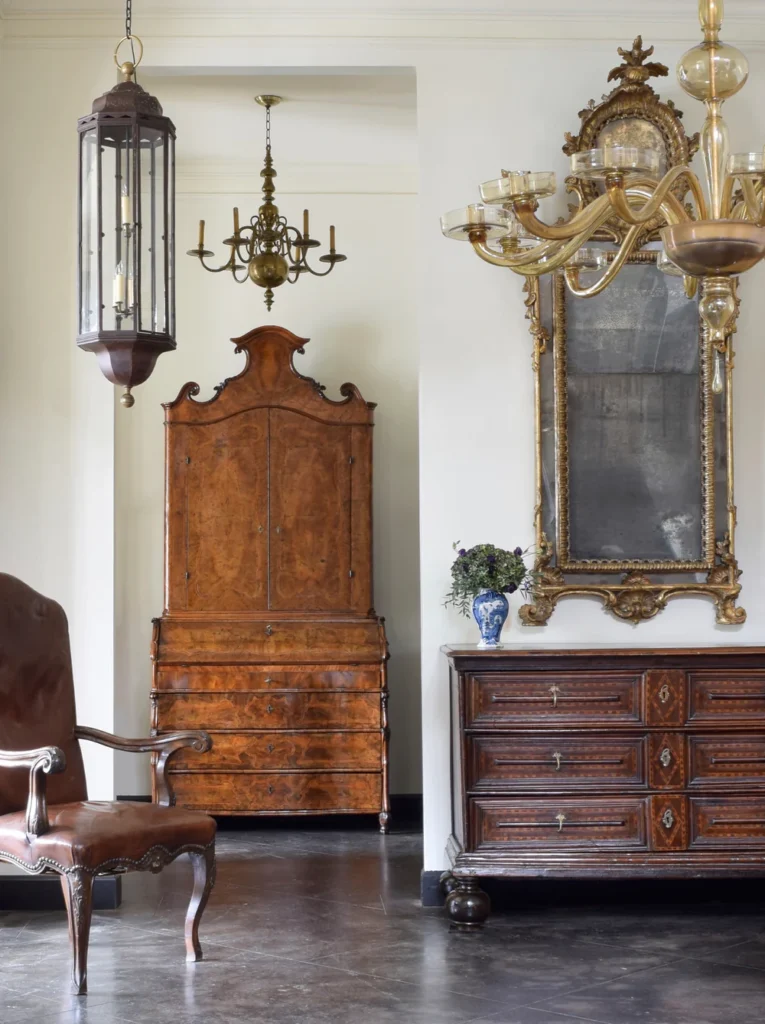
So now to the question of why would one want to use vintage and antique items at all. Mixing in some antique or vintage pieces when decorating your home brings a lot of interest into the scheme. It creates contrast and depth in the overall design. This also brings a sense of history and timelessness that is always an appealing feeling of a lived-in home. And finally, it also can be used for a creative story-telling and artistic approach to design.
In all practicality, how can one do this right? How does one avoid the place feeling frumpy and old. Follow my 5 tips for incorporating vintage pieces and antiques into your interior design scheme.
1. The 80/20 rule
Unless you’re an antiques collector, your home will likely be furnished with predominantly contemporary pieces; art, furniture, lighting, rugs, decor. To bring in a bit of a mix, the 80/20 rule is a great parameter to keep a healthy balance. Make sure that about 20% of the furniture pieces are antique, and that they are on the larger side. You can also add in some smaller items to complement, such as decorative pieces or mirrors. If you go toward a 50/50 distribution of modern and antique, then you run the risk of having a space that is undefined and more difficult to read. A well-selected 20% vintage or antique items will create 80% of the interest to your modern home!

2. Reupholster
Consider reupholstering an antique piece with a great contemporary fabric to bring it into the modern day. If you have an upholsterer that understands and can use traditional methods and materials, do use them! It is often this contrast between the old and new that make a piece so unique.

3. Livability
Make sure your space doesn’t become unpleasant!! When using antiques, keep in mind that using pieces that are too fragile or too uncomfortable to sit on can make yours a space you won’t want to truly inhabit. Get pieces that show off their great craftsmanship, patina and style but that also enhance your life.
4. Accent pieces
Use antiques or vintage pieces as accents, like punctuation marks. The patina and the craft of an older piece will definitely stand their ground in a modern space. If your space is designed in a modern style, add an interesting mirror, or light fixture, or even smaller decorative pieces. These bring that old world feel that will go a long way.

5. Star of the show
Using an antique or vintage piece as the starting point of the design can inspire you to build the rest from that. For example, a fabulous antique desk can be the central element of the design, taking center stage. In a case like this, the other elements of the space will serve the purpose of enhancing its beauty and serving in supporting roles. A beautifully aged rug can ground everything else and you can take colors from it to expand on the rest of the design.

Seamlessly integrating modern and vintage/antique pieces in home settings is one of our strengths at Natalia Allende Studio. Schedule your free discovery call here.
Follow us on Instagram to stay up to date.
You may also be interested in learning how to create a home that will inspire you to become your best self. Read our post “Aspirational Design, a Quest for our Best Self“